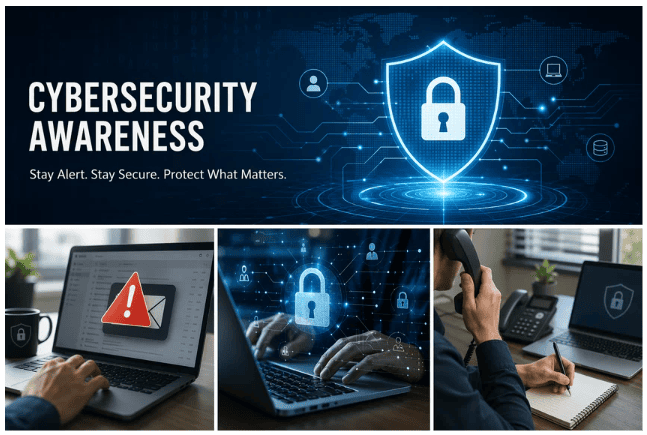
The holiday season brings opportunities to spend time with family and friends, travel, celebrate, and recharge. It can also introduce unique security and safety challenges. Increased travel, online shopping, social gatherings, and busy schedules can create opportunities for criminals, scammers, and other bad actors to take advantage of distractions and reduced vigilance.
The holidays can create distractions and a false sense of security. Busy schedules, crowded stores, travel plans, and social activities often divide our attention and make it easier to overlook warning signs. Criminals, scammers, and other bad actors understand this and frequently increase their activity during the holidays, knowing that distracted people are more likely to make mistakes, let their guard down, or ignore suspicious activity.
As we enter the holiday season, now is a good time to revisit basic safety and security practices that help protect ourselves, our families, our organizations, and the information entrusted to us.
Common Holiday Security Risks
Many of the risks we encounter during the holiday season are not new. However, they often increase in frequency and effectiveness because people are busier, distracted, and more likely to make rushed decisions.
Common holiday safety and security concerns include:
- Phishing emails, text messages, and package delivery scams
- Fraudulent online shopping websites and fake promotions
- Package theft and property crimes
- Increased social engineering attempts
- Oversharing personal information on social media
- Home security vulnerabilities during travel
- Public safety concerns in crowded shopping centers, airports, and event venues
- Mishandling of company, government, or sensitive information while away from the workplace
- Reduced awareness due to holiday distractions and busy schedules
- Physical security threats in crowded public spaces
Whether online or in person, many holiday related incidents occur because people are distracted, rushed, or focused on completing a task rather than observing their surroundings. Remaining alert and taking a few extra moments to assess situations can significantly reduce risk.
Applying OPSEC Concepts During the Holidays
Many of us are familiar with Operations Security (OPSEC) and its role in protecting sensitive information at work. The same principles can also help protect our personal lives during the holiday season.
Whether shopping online, traveling, posting on social media, or attending social gatherings, it is important to consider what information is being shared, who may have access to it, and how it could be used by others.
Simple OPSEC practices include:
- Limiting the amount of personal information shared online
- Avoiding discussions about sensitive work activities in public places
- Being mindful of who can see travel plans, vacation photos, or location information
- Protecting access credentials, devices, and personal information
- Remaining aware of attempts to elicit information through casual conversation
Good OPSEC habits help reduce opportunities for criminals, scammers, and other adversaries to exploit information that may seem harmless on its own.
Protecting Yourself, Your Family, and Information
Simple precautions can significantly reduce risk during the holiday season.
Shopping and Public Safety
- Remain aware of your surroundings when shopping, dining, or attending holiday events
- Identify exits and emergency evacuation routes when entering crowded venues
- Avoid becoming distracted by mobile devices while walking through parking lots, stores, or public spaces
- Keep purses, wallets, phones, and other valuables secured and within sight
- If you notice suspicious behavior, unattended items, or anything that appears out of place, notify store personnel or local authorities immediately
- Trust your instincts. If a situation feels unsafe, remove yourself from the area and contact authorities if necessary
Crowded shopping centers, events, and transportation hubs can be attractive targets for criminal activity and, in rare cases, acts of violence. Maintaining situational awareness and knowing where to seek assistance are among the most effective ways to protect yourself and those around you.
Online Safety
- Verify websites before making purchases
- Be cautious of unsolicited emails, text messages, and package delivery notifications
- Use strong passwords and multifactor authentication whenever possible
- Avoid conducting personal shopping on company issued devices
- Monitor financial accounts regularly for unauthorized activity
Cybercriminals know that online shopping activity increases significantly during the holiday season and often tailor scams to mimic retailers, shipping companies, financial institutions, and charitable organizations. Taking a few moments to verify communications, websites, and payment methods can help prevent fraud, identity theft, and unauthorized access to sensitive information. Additionally, remember: if it sounds too good to be true, it probably is! Don’t let the prospect of a great deal cloud your judgment.
Travel Safety
- Report foreign travel in accordance with established reporting requirements and your organization’s procedures
- Avoid posting travel updates in real time on social media
- Remain aware of your surroundings when traveling
- Keep electronic devices and valuables secure
- Be cautious when using public WiFi networks
Whether traveling across town or around the world, maintaining awareness of your surroundings and protecting your personal information are essential. Travelers are often targeted because they are carrying valuables, navigating unfamiliar environments, or connected to unsecured networks. A little preparation before departure can help reduce risk and ensure a safer, more enjoyable trip.
Home and Personal Safety
- Secure doors, windows, and other access points before leaving home
- Use exterior lighting and consider timers when traveling
- Track deliveries and retrieve packages promptly
- Consider asking a trusted neighbor to monitor your property during extended travel
- Break down and properly dispose of packaging from valuable purchases
Homes often become more attractive targets during the holiday season due to increased deliveries, decorations, travel, and the presence of gifts and valuables. Simple preventative measures can make your home a less appealing target and provide greater peace of mind while you are away.
Protecting Sensitive Information
- Follow all company and government security policies and procedures
- Protect company issued and government furnished devices from loss or theft
- Use only approved systems and applications for official business
- Be mindful of conversations involving work related information in public settings
- Avoid discussing sensitive information with individuals who do not have a need to know
- Remember that each employee plays a role in protecting the organization’s reputation, operations, customers, and contractual commitments
- Be cautious when discussing work related topics during holiday gatherings or social events
- Report suspicious contacts, requests for information, or attempts to elicit sensitive details about your organization, coworkers, customers, or government partners
Security extends beyond protecting information systems and classified material. Every employee has a responsibility to protect the organization’s interests, maintain customer trust, and safeguard information that could be valuable to competitors, criminals, or foreign adversaries. The holiday season is no exception, and it is important that security remains a year round commitment both at work and at home.
Good security habits do not take a holiday. By maintaining awareness, practicing good security habits, and reporting concerns promptly, we help protect ourselves, our families, our organizations, and national security throughout the year.
Reporting Concerns
The holiday season is not a time to relax reporting requirements. In fact, many incidents occur because warning signs go unreported.
Examples of events, activities, and situations that should be reported include:
- Suspicious contacts or requests for information
- Potential phishing attempts or cyber incidents
- Suspicious social media contacts, online interactions, or attempts to establish inappropriate relationships for the purpose of obtaining information
- Lost or stolen devices containing company or government information
- Suspicious activity observed at work or while traveling on official business
- Foreign travel, in accordance with your organization’s reporting requirements
- Security incidents involving classified information, CUI, or sensitive company information
- Attempts to gain unauthorized access to facilities, information, or systems
- Potential workplace violence concerns, including threats, intimidation, aggressive behavior, or signs that an individual may pose a risk to themselves or others
- Insider threat concerns or indicators involving coworkers, contractors, or trusted partners, including attempts to bypass security procedures, unauthorized access to information, unusual interest in sensitive information, and other concerning changes in behavior
Security concerns often present themselves as small irregularities before becoming larger problems. If something seems unusual, suspicious, or out of place, report it.
Why Reporting Matters
Timely reporting allows security personnel to assess potential risks before they develop into more serious incidents. Early reporting helps protect personnel, facilities, systems, information, and national security interests.
Reporting does not require certainty. You do not need to know whether something was a threat, a mistake, or an innocent misunderstanding. Simply report what you observed and allow security professionals to determine the appropriate response.
Remember: it is always better to report a concern that turns out to be harmless than to ignore a warning sign that later becomes a significant issue.
How and Who to Report To
If you encounter a security concern, cyber incident, suspicious activity, or reportable travel event, contact your Facility Security Officer (FSO) as soon as possible.
If you are located at a government site or another contractor facility, follow local reporting procedures as appropriate, but always ensure your organization’s FSO is informed.
When making a report, provide as much information as possible, including:
- What happened
- When it occurred
- Who was involved, if known
- What actions were taken
- Any supporting information or documentation available
Your FSO can help determine whether additional reporting, notifications, or follow up actions are required.
Always bring any concerns or reporting to your company’s FSO!
It is our job as FSOs to help you navigate any situations that arise.
Resources and Additional Learning
Continued learning is an important part of supporting a strong security program. The resources below offer helpful guidance, job aids, training modules, and official policy documents that reinforce the topics discussed in this newsletter. We encourage all personnel to explore these materials and become familiar with the tools and requirements that govern and support your organization’s industrial security program.
CDSE Pulse Staying Secure for the Holidays
CISA Identity Theft and Personal Cyber Threats
Ready.Gov Holiday Safety Toolkit
Ready.Gov Mass Gathering Incidents
CDSE DOD CUI Awareness Training
32 CFR Part 147 (Adjudicative Guidelines)
As always, if you have any questions…ask your FSO! Your company’s FSO is the best person to help you navigate any questions you have about security compliance, briefing, and reporting requirements. As security professionals, we are here to help you navigate all things security and ensure you fulfill all security requirements.